
slow and fine: a few gentle snail facts
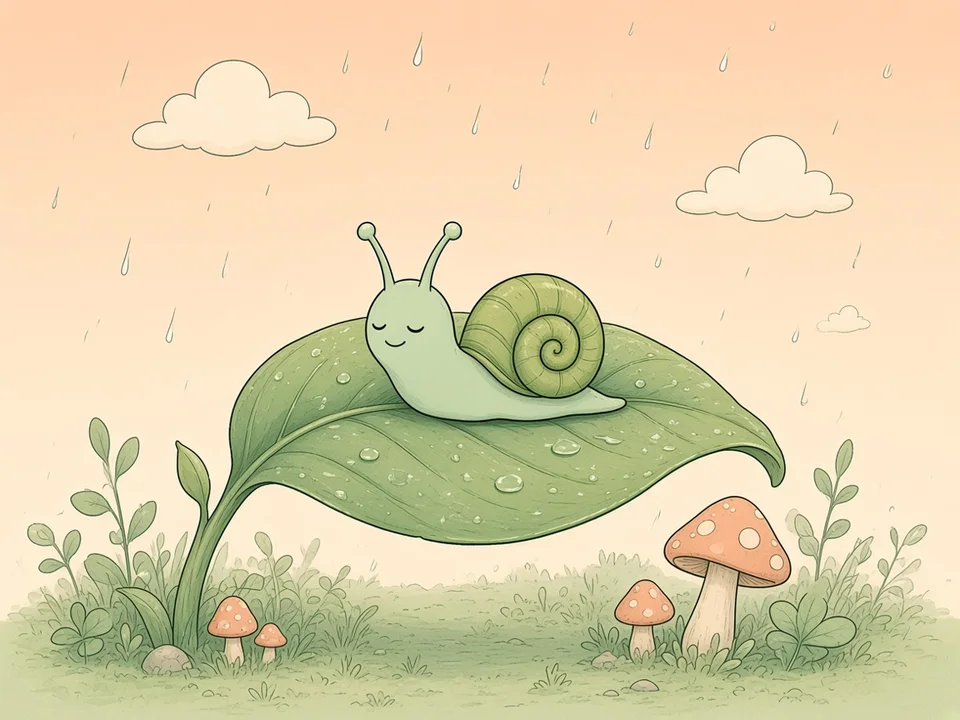
our mascot is a snail for a reason. snails don't hurry, and they seem completely fine about it. here's a slow little stroll through what the experts actually say about them.
there are a lot of them
- snails and slugs are molluscs, and molluscs are the second biggest phylum of animals on the planet, after arthropods, says london's natural history museum.
- in the UK alone there are 100 species of land snail, not counting freshwater snails, plus 46 species of terrestrial slug.
slow is the whole trick
snail slime is a non-newtonian liquid: under slow pressure it behaves like a liquid, under fast pressure like a solid. the museum explains that snails and slugs move at a slow speed, which keeps their slime flowing as a lubricant. going slow isn't a flaw. it's how the whole thing works.
going slow isn't a flaw. it's the design.
naps with the door shut
- if it gets too dry, snails can go into a dormancy called aestivation. if it gets too cold, they might hibernate.
- before hibernating, many species seal the opening of their shell with a mucus plug, then slow down into a kind of sleeping state.
- you often find them clumped together while they wait out the cold. cozy.
quiet little gardeners
according to the museum's curator of molluscs, most species don't eat living plants. they eat decaying or dead vegetation and are important recyclers of nutrients.
the fastest snail on record
on 20 february 1990, a garden snail named verne finished a 31 cm (12.2 in) course at west middle school in plymouth, michigan in 2 min 13 sec, about 0.233 cm per second. guinness world records says the snail-racing version of a four-minute mile would be roughly an 8-day mile. verne still made it.
sources
- Natural History Museum (London): For the love of snails and slugs
- Guinness World Records: Fastest snail, land snail
every fact above links to its public source. mentions are for reading only: no logos, no affiliation.