
hammock & tea: two old words for sitting still
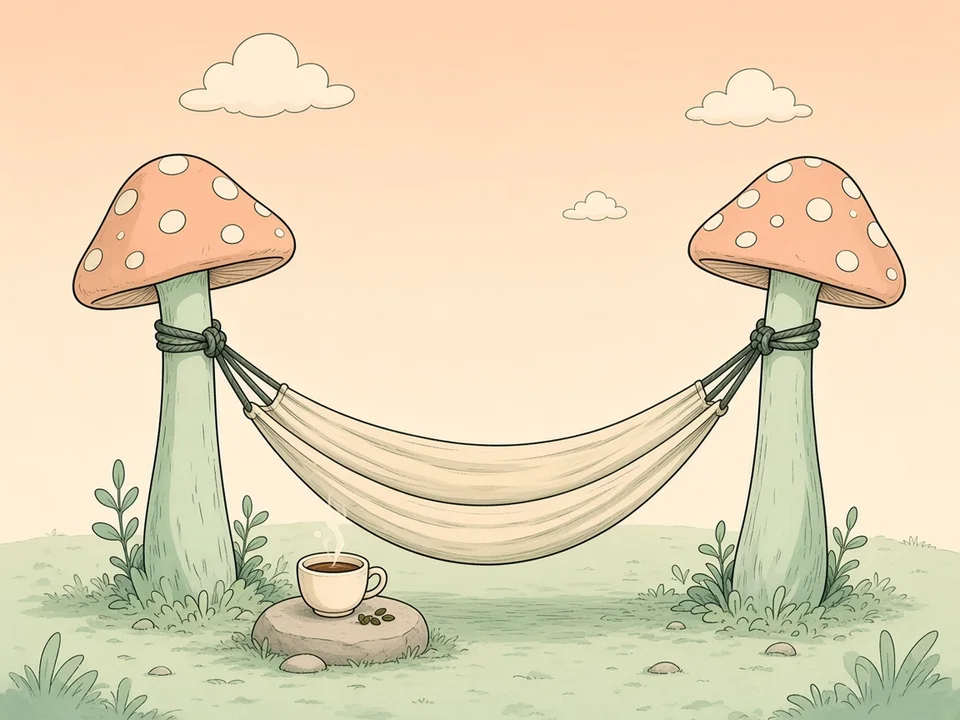
the snail's whole setup is two things: a hammock and a cup of tea. both words took a long, unhurried trip to get to english. here's the route.
hammock
- english has used "hammock" for a hanging bed since the 1650s, altered from earlier forms like hamack and hamaca (1550s).
- those come from spanish hamaca, from an arawakan (haiti) word apparently meaning "fish nets". the etymology dictionary compares taíno amaca.
- dutch (hangmat) and german (hangmatte) reshaped the word as if it meant "hang-mat". honestly fair.
tea
- the word's earliest form in english is chaa, from the 1590s, which came from portuguese cha, via macao, from mandarin.
- the later form that became "tea" came via dutch thee, from malay teh and the amoy dialect's t'e.
- words like russian chai, persian cha and turkish çay came by overland trade routes from the mandarin form. two roads, one leaf.
- tea was known in paris by 1635, and drinking it reached england by 1644.
one leaf, two roads, and a hammock at the end of both.
a whole day for tea
- the united nations general assembly proclaimed 21 may as international tea day, with the UN's food and agriculture organization (FAO) leading it.
- the UN says tea's origins stretch back more than 5,000 years, and that tea is the most consumed beverage in the world, after water.
- smallholder farmers are responsible for 60 percent of world tea production, and world production in 2025 was estimated at around 7.3 million tonnes.
that's a lot of warm cups. ours is still steaming.
sources
- Online Etymology Dictionary: hammock
- Online Etymology Dictionary: tea
- United Nations: International Tea Day, 21 May
every fact above links to its public source. mentions are for reading only: no logos, no affiliation.